


Filter Systems Australia
Reverse Osmosis Water Filter with 3/4" Laundry Wall Mount 50GPD (GT1-39)
Reverse Osmosis Water Filter with 3/4" Laundry Wall Mount 50GPD (GT1-39)
Couldn't load pickup availability
Wall Mount Reverse Osmosis System GT1-39
Wall Mount Reverse Osmosis Complete System is designed as a portable RO System to remove mineral content from water. Ideally used on bore water** or any other water deemed to be not suitable for human consumption. After running water through the RO System it will be suitable for human consumption (pH may become acidic due to low mineral content in water, we recommend using an alkalising media or filter after this for drinking water). Designed to be mounted on the wall in the laundry above laundry tub, so that it can fit onto a 3/4" tap and the waste water can go directly down the drain. The treated drinkable water will flow to a storage tank (not included). Comes with a 3/4" main entry adaptor.
Flow rate is approximately 50 Gallons Per Day, which will produces approx 215 ltrs per day on reasonably good quality water. The higher the mineral content, the less water will be produced and the more waste water will be produced. All filters and membranes are supplied. Kit includes Tubing, Pre Carbon & Post Carbon Block filters. It is recommended to fill your container whilst it is in your laundry tub, as on this portable RO system there is no automatic shut off. So to avoid any accidental overfills, fill whilst near sink or drainage.
** Please contact us with a water analysis before purchasing this system if you are on any raw water source. i.e bore/river/creeks
Kit Contains
- Inlet Feed Water Adaptor 3/4"
- Opening Spanner
- Tubing
- Thread Tape
- Instructions
- Wall Mount RO Filter System + Filters
Inlet Feed Water Requirments
- Pressure: 50 - 100 psi
- TDS: <2,000 mg/L
- Hardness: <250mg/L
- Iron: <0.02
- Manganese: <0.01
- Temperature: 1°C - 26°C
- Flow Rate (Inlet): 1L/Min
RO water purification systems will reduce and eliminate TDS (total dissolved solids) like salts and minerals from our drinking water. However contrary to common beliefs, less than 1% of the organic minerals are actually found in most raw water supplies. With the increase of pollutants, our water supply contains mostly inorganic minerals. Inorganic minerals consist of calcium, iron, magnesium, carbonate and lime compounds, which are not compatible with our bodies. The body’s cells reject theses minerals leaving dissolved inorganic substances (acid crystals – minerals deposits) throughout the body.
This accumulation of debris creates more work and trouble for the body, such as arthritis in joints, gallstones, kidney stones and mineral deposits in artery walls. Organic minerals that are considered soluble, which means the body absorbs sustenance into the cells, are found in our live foods such as fruits & vegetables. One glass of freshly squeezed orange juice would be higher in minerals than 30 gallons of untreated raw water. Purified water provides a necessary rinsing treatment for hydration purposes as our body is mostly fluid (over 80% water) and equally important to rinse impurities out of our body.
Replacement Filters & Times
Stage 1 + 3: 5 Micron Carbon Block Filter, Lasts 12 Months* - Buy HERE
Stage 2: Asprinn 50 GPD USA Membrane, Lasts up to 4 Years** - Buy HERE
* On Average Municipal Water Quality and Usage
** Membrane will need replacing as early as 12 months on Poor Water Quality, commonly found in WA and parts of SA/NT
Click Here for Discounted Combo Pack
Do You Want Filtered RO Water On Tap? Consider an Undersink RO System!

Please note that Portable RO Systems are not designed for permanent installations, and do not come with the components required to be plumbed in (i.e it won't produce water "on tap"). Portable RO Units are only designed to be connected to water pressure as needed, and then shut off/disconnected when finished. A Portable RO System will typically produce water at a slower rate than normal tap water (i.e. most RO membranes produce water at a rate of 8 litres per hour), and will also produce waste water at a ratio of 1L filtered water to 1-1.5L of wastewater. For this reason, you will need to make water as required, and store your filtered water in a vessel or container (such as the below 23L Water Container from Kmart). Hot tip: Save yourself the headache of a flooded kitchen by sitting your water container vessel in your sink whilst you fill it up (and set an alarm - 1 hour for every 8L of water)! That way, if you forget about it and the jug overflows - at least the overflow goes down the drain instead of you having to mop it all up off the bench and floor!
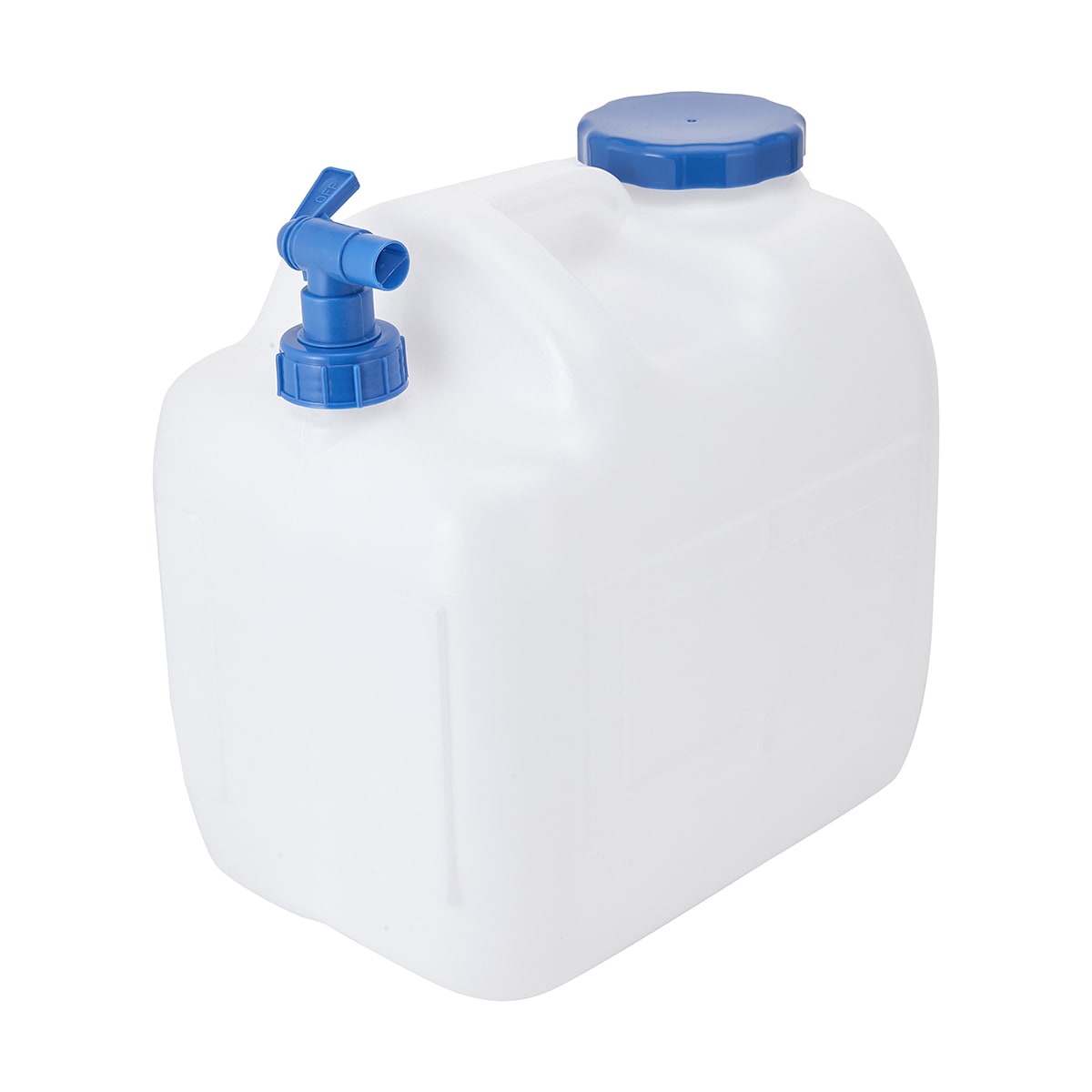
Check out this 23 Litre Water Container from Kmart Australia!
Alternatively, if you don't want the hassle of making RO water every week, and having RO filtered water on tap is your goal, please click here to see our range of Undersink RO Systems. Trust our personal experience - if you have the option to install an under-sink RO system, the convenience of having filtered water on tap will pay for itself!
***IMPORTANT INFORMATION ABOUT WATER SANITATION FOR RAIN/BORE WATER SOURCES***
Disclaimer: Do not use or drink microbiologically unsafe water or water of unknown quality without adequate disinfection.
PLEASE NOTE: REVERSE OSMOSIS SYSTEMS PERFORM OPTIMALLY ON CHLORINATED (MAINS/TOWN) WATER, AS THE PRESENCE OF CHLORINE KILLS THE BACTERIA/FUNGI/YEAST. FAILURE TO ADEQUATELY DISINFECT THE WATER WILL RESULT IN BIOFOULING OF THE RO MEMBRANE (I.E. A BACTERIA/FUNGUS/SLIME COLONY WILL START GROWING INSIDE THE MEMBRANE WHICH WILL PUTREFY YOUR FILTER SYSTEM & RENDER THE RO MEMBRANE UNSALVAGEABLE). THIS ALSO APPLIES TO RAIN AND TANK WATER SOURCES. A COMPREHENSIVE WATER ANALYSIS WILL BE REQUIRED BEFORE USING REVERSE OSMOSIS TO FILTER GROUNDWATER SOURCES SUCH AS A BORE OR SPRING. FSA CANNOT AND WILL NOT RECOMMEND ANY COMBINATION OF FILTERS TO MAKE UNTREATED AND UNTESTED WATER SOURCES (SUCH AS RIVER/STEAM/CREEK/LAKE/DAM WATER) SAFE TO DRINK.
For Protection Against Bacteria/Fungi/Yeast
Bacteria (such as E.Coli) can colonize in the stagnant water and result in harmful illnesses when consumed. For sanitation against common water-borne bacteria/viruses in rainwater and potable bore water*, we, therefore, recommend dosing your tank with a product such as Hydrosil Ultra 7.5% Water Sanitiser to ensure protection against microbiological contamination/biofouling in your pipework and/or filter system.
HydroSil is a food-grade silver-activated, hydrogen-peroxide based water sanitiser, which acts to oxidise bacteria, yeast, fungi & viruses, without leaving any dangerous residues behind. HydroSil sanitizes and protects your tanks and water storage devices, making rainwater and potable bore water safe and suitable for human consumption. HydroSil is not a chlorine-based chemical like most sterilisers on the market today. It is non-toxic, and safe to use around your home and family.
Dosage Rate: HydroSil should be dosed at a rate of 200mL per 1000L of water. To scale down to tank size, you will require 20mL per 100L.
Buy Hydrosil Ultra 7.5% Here:
About Rain Water
Australia is the world’s driest inhabited continent, and an astonishing 10% of Aussies don’t have access to a mains water supply, so it’s no wonder why rainwater and bore storage tanks are so popular in rural areas to save water during drought and for household use all year round in cooking, cleaning, gardening, bathing and sometimes even drinking. However, whilst many people enjoy the sweet taste of rain and spring water, and some even swear by the ‘raw water’ trend (which proponents (sometimes falsely) believe has more minerals and fewer contaminants than regular chlorinated town water), we cannot stress enough that drinking untreated water is a very bad idea!
Scarily, in Australia, the general public perception is that rainwater is pure, clean, and safe to drink, but according to the Australian Environmental Health committee’s Guidance of the Use of Rainwater tanks, the fact is that the microbial quality of tank-collected rainwater is typically worse than regular urban tap water, and not to mention, the chemical quality of rainwater can be negatively impacted for those living near heavy industry or in areas with heavy traffic emissions. For example, rainwater samples in Port Pirie, South Australia, (which has one of the world’s largest lead smelters), have been found to contain levels of lead that exceed Australian Drinking Water Guidelines by up to ten times! Even bushfire can contaminate rainwater! And that’s not to mention the microbiologically sickening soup of bacteria, viruses parasites that inevitably make their way into your tank from disease-spreading insects such as mosquitoes, the excrement and decaying carcasses of frogs, snakes, rodents, and possums that commonly live in and around tanks, and the droppings from bats and birds flying overhead! Also consider that bacteria tend to proliferate in moist and warm environments, meaning that warmer weather, in particular, has the tendency to turn your tank into a putrified bacterial breeding ground. Thus, whilst rainwater may smell odourless, taste great, and look clean and clear to the naked eye, with the human senses alone, you simply cannot tell what potentially harmful microscopic contaminants could be lurking in your tank water (even after filtering the water with carbon) – and you certainly don’t want to be drinking it!
Do you need to treat your rainwater tank for safe drinking? As an alternative to constantly dosing your tank, click here to check out our range of Ultraviolet Water Sanitation Systems!
About Bore Water
Bore water will always require filtration, as whilst you would think it is “naturally purified” to some extent as the water seeps through the aquifer via various layers of bedrock, this water is highly susceptible to contamination by bacteria, viruses, parasites (see: Brain-Eating Parasites), sewerage (think human excrement, cleaning and bathing products), chemicals, fertilisers, pesticides, minerals, heavy metals (such as lead, zinc, chromium, copper, cadmium, arsenic and nickel), and sometimes even radioactive elements (such as uranium) from both natural sources and human activity. As with rainwater treatment, the most cost-effective solution is typically to use 5 Micron Carbon Filtration in combination with UV Sterilisation to ensure 99.9% eradication of all parasites, bacteria, viruses. However, this system is not always a "total fix", as bore water chemistry is incredibly complex, and sometimes may not even be treatable. Yet another common misconception we often encounter is that carbon can filter out anything and everything – but unfortunately, carbon doesn’t kill bacteria or remove minerals, salts and other such dissolved inorganic substances!
We STRONGLY recommend that you get your bore water tested to determine if there are any underlying issues in the water chemistry of your bore, before you make any purchases or try to filter it. If you have not had your water tested yet and would like to get this done, please contact us to have your bore water analysed.

