Filter Systems Australia
Anti-Scale Spot Free Rinse De-Ionising 9" x 17" Media Vessel System | Small Scale/Home Window Cleaning & Car Detailing Water Filter (GT1-112-DI)
Anti-Scale Spot Free Rinse De-Ionising 9" x 17" Media Vessel System | Small Scale/Home Window Cleaning & Car Detailing Water Filter (GT1-112-DI)
Couldn't load pickup availability
Anti-Scale Spot Free Rinse De-Ionising 9" x 17" Media Vessel System | Small Scale/Home Window Cleaning & Car Detailing Water Filter (GT1-112-DI)
Our NEW GT1-112-DI Spot Free Rinse Window Cleaning & Car Detailing Media Vessel System produces softened, de-ionised, "TDS-Free" Water (<1 Total Dissolved Solids) to remove contaminants and particles for the ultimate, shiny, scale-free spot-free rinse, reducing the need to chamois or polish surfaces, thus reducing the risk of unsightly scratches and scale build-up! This system is perfect for small-scale applications, or for use with Pressure Washers at home (especially if you have a carbon filter system installed prior, as Chlorine/Chloramine can deplete the DI resin). Ideal for use on Cars, Boats, Trucks, Vans, Utes, Motorbikes, Caravans, RVs, Prestige Vehicles (pretty much any type of vehicle you can think of), but may also be suitable for casual users such as car enthusiasts wanting to do a regular spot-free touch-free rinse of a ceramic coated/paint protected vehicle or those with many glass fixtures around the home (i.e. windows/glass pool fences). Works well with common pressure cleaner brands such as Gerni, Ryobi, and Karcher. The 9" x 17" media vessel is compact in size and stature (for easy transportation and storage), and can be used with Pressure Cleaners at flow rates of up to 7.5L/Min (6L Model) or 11L/Min (9L Model). The inlet of the system is a 1” BSP female port with garden hose adaptors, which makes hooking the system up between your tap and pressure washer super quick and easy.
Spot Free Rinse Filter Kit
- 1x H917FRP-2.5 High Performance Filtration 9" x 17" Pressure Vessel Tank
- 1x GT36-64N 1" BSP In/Out Head Cap
- 4kg (approx. 6L) of virgin Indion Mixed Bed DI Resin (or Optional Upgrade to 6kg/9L DI Resin)
- 2x GT19-35SC 1" x 1" Male BSP HEX Joiners with O-Rings
- 2x GT19-155 20 x 25mm Tap Adaptors
- Instructions
See Specs Tab for System Dimensions.
Features
- Standard Hose Attachments
- Suitable for use with pressure washers
- Spot Free Rinse 0 TDS Water*
- Removes salts, minerals, and hardness from water.
- High Capacity Resin – 4Kg = Approx 6L Of DI Resin
*Note: Zero (0) TDS is equivalent to <1ppm TDS. As with any filter, the capacity of virgin de-ionizing resin to remove TDS from water gradually degrades over time. As the hardness of water varies depends on the water source, there is no hard and fast rule for when you should replace the DI resin. As a rule of thumb, DI resin is due for replacement when you notice spots appearing.
What is a Spot Free Rinse? What is Zero TDS Water?
Spot Free Rinsing Systems produce water that has been softened or filtered via Reverse Osmosis, Deionisation (aka. Ion Exchange Resin Filtration) or Distillation, to remove the metals, minerals, salts, contaminants, and dissolved particles (Total Dissolved Solids aka. TDS) that cause limescale build-up, corrode metal, bond to surfaces and dissolve the paintwork finish on cars, windows, and unprotected surfaces. Leaving scale to build up on surfaces causes a lackluster appearance, and ultimately leads to surface damage over time.

Examples of scale spots on a Car Window, Car Paintwork, and a Glass Pool Fence.
The most common dissolved solids often found in Australian tap water (and notably in areas with typically high TDS like Perth, Adelaide, and Brisbane) include calcium, magnesium, sodium, chloride, aluminum, nitrates, and phosphates. Water that contains high amounts of these salts and minerals (calcium and magnesium ions in particular), tends to bond easily with other ions and compounds to form hard scales and leave behind stubborn white spots once the water evaporates - exactly the same as the type of white scale that builds up in your shower over time!
Why use De-Ionised (DI) Water for the Perfect Spot Free Rinse?
"Zero TDS" DI Water water produces an anti-scale Spot Free Rinse for cars and windows, as there are no residuals in the water after the water evaporates. Having a Spot Free Rinse eliminates the need to use a squeegee or chamois to remove excess water from a surface, thus helping to avoid scale marks, prevent scratches, and stop staining.
DI water is sought after for several uses due to its negligible mineral content, affordability, and the fact that DI systems provide a faster and more economical solution to producing Zero TDS water than RO or Distillation. The quality water produced by our system (low EC/TDS Free) is in most cases better than commercially produced distilled water and even better than reverse osmosis (which retains a residual mineral content after filtration).
How does Indion® Ion Exchange Deionising Resin Soften Water?
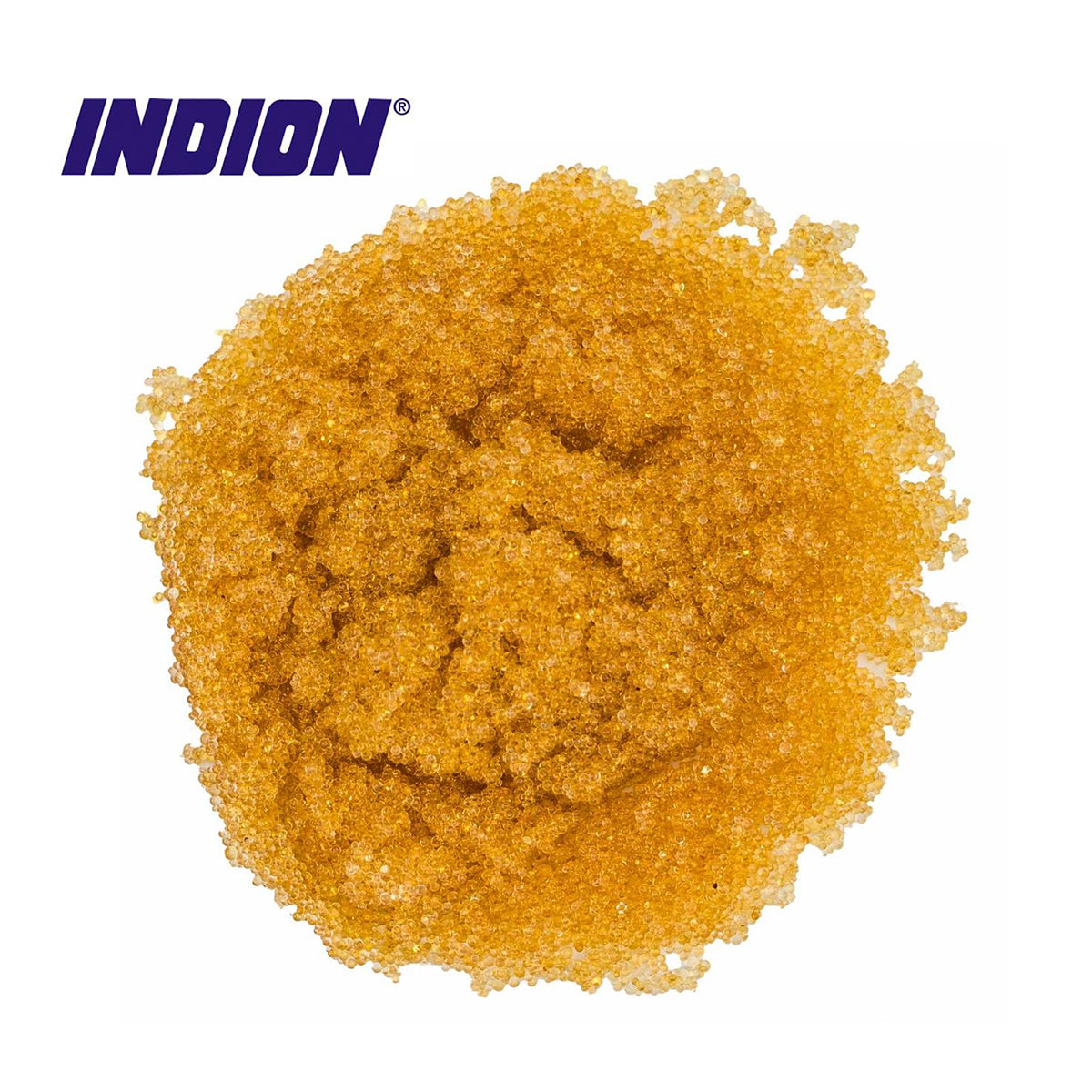
In our Spot Free Rinse System, we use only the best premium quality virgin Indion® MB-115 Mixed Bed Ion Exchange Resin from Ion Exchange Ltd, the leading global manufacturer of Ion Exchange Resins for water softening, de-alkalization, and de-mineralisation.
Indion® De-Ionising Resin is a unique mixed bed 60% Sulfonic Acid & 40% Quarternary Ammonium based Polystyrene Copolymer that contains millions of microscopic ion-exchange sites. When water passes through the resin, TDS anions and cations (i.e. Ca2+ and Mg2+) in solution will preferentially bind to the ion exchange sites, leaving ultra pure water as the end product. Over time, the resin media will become exhausted and require replacing.
Purchase replacement Indion® De-Ionising Resin Media HERE.
How do I know when I need to change my resin? Recommended (Optional) Add On: HM Digital Com-100 EC/TDS Pen

As a rule of thumb, DI resin is due for replacement when you notice spots appearing. Using the "quick & dirty" method, you can test for the presence of build-up by placing a few drops of DI-filtered water in a clean, residue-free glass, allowing the water to evaporate, and then checking for the presence of spots - if you notice white spots have formed, it's time to change your filter. Alternatively, to take the guesswork out of checking your resin, you can test the water quality with a properly calibrated EC/TDS Meter, such as the HM Digital Com-100 TDS/EC Pen. Check your water quality once a month according to the above infographic and change the resin when it reaches 30+ uS/cm. *Please Note: Zero (0) TDS is equivalent to <1ppm TDS or <1 uS/CM. As with any filter, the capacity of virgin de-ionizing resin to remove TDS from water gradually degrades over time. As the hardness, salinity and TDS of water varies depending on the source, the starting uS/cm reading of DI-filtered water may vary (i.e. if you have incredibly hard/salty/high TDS water to begin with, then you might not be able to achieve 0 uS/cm), there is no hard and fast rule for how often you will be required to replace the DI resin (for example, it might be once a month or more regularly for some customers, or a few months for others).
Purchase replacement Indion® De-Ionising Resin Media HERE.
Recommended (Optional) Add On: 10" x 4.5" Carbon Pre-Filter System with Pressure Gauge
 Chlorine and Chloramine are known to deteriorate rubber and corrode metal, as well as deplete DI resin, so it's recommended to install a carbon pre-filter prior to the DI Media Vessel. FSA's recommended carbon pre-filter setup includes a UV resistant 10" x 4.5" Housing with a Stainless Steel Bracket (which can be wall-mounted and installed in full sun) with a pressure gauge to help monitor filter performance - simply mark the level of pressure on the gauge upon installation or when you install a new carbon filter (reduced pressure over time indicates filter blockage). The Carbon Pre-Filter will provide chlorine-free water for 45,000L @ 7L/Min (with the 5 Micron CTO Filter), and even longer-lasting results with the 0.5 Micron Chloramine Reduction Carbon Upgrade.

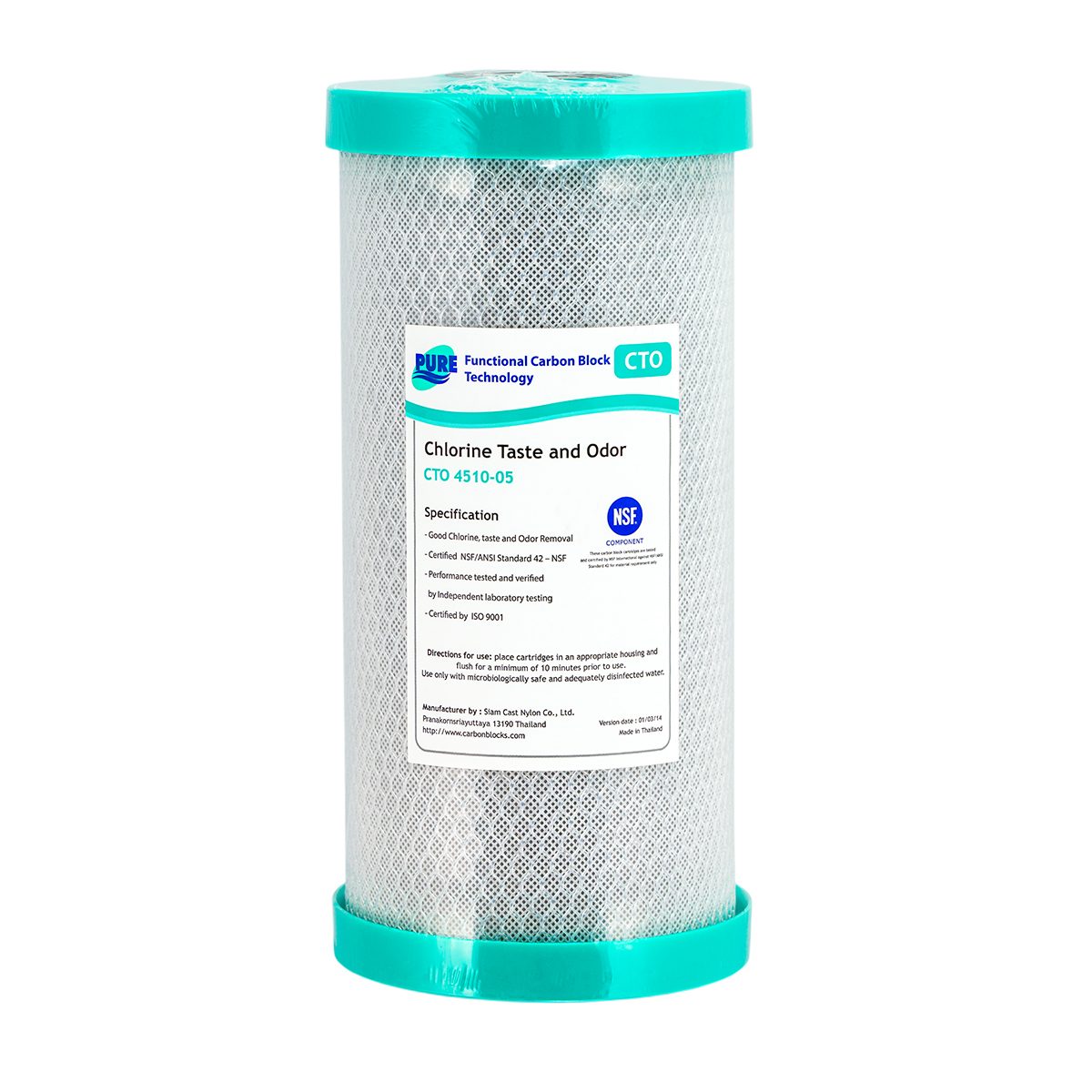
GT4-13CTO - 5 Micron Chlorine Reduction Coconut Carbon (For Improved Chemical Reduction on Mains Water)
-
- CTO Chlorine Reduction Carbon is our standard recommendation for reducing chlorine and chemicals on mains water - great value and quality!
Chlorine is generally the biggest concern for those on municipal water. Chlorine is added to mains water to disinfect against bacteria and viruses, however, Volatile Organic Compounds and Disinfection By-Products such as Trihalomethanes (THM) and Chloroform can form when chlorine reacts with oxygen and other chemicals in solution - and you can imagine the damage that these chemicals can cause by boosting the potential for oxidisation (and therefore, rust and corrosion) on metal and other materials. The Chlorine Reduction cartridge will provide you with clean water, free from nasty chemicals, and remove or reduce any chemical smells in the water caused by free chlorine.
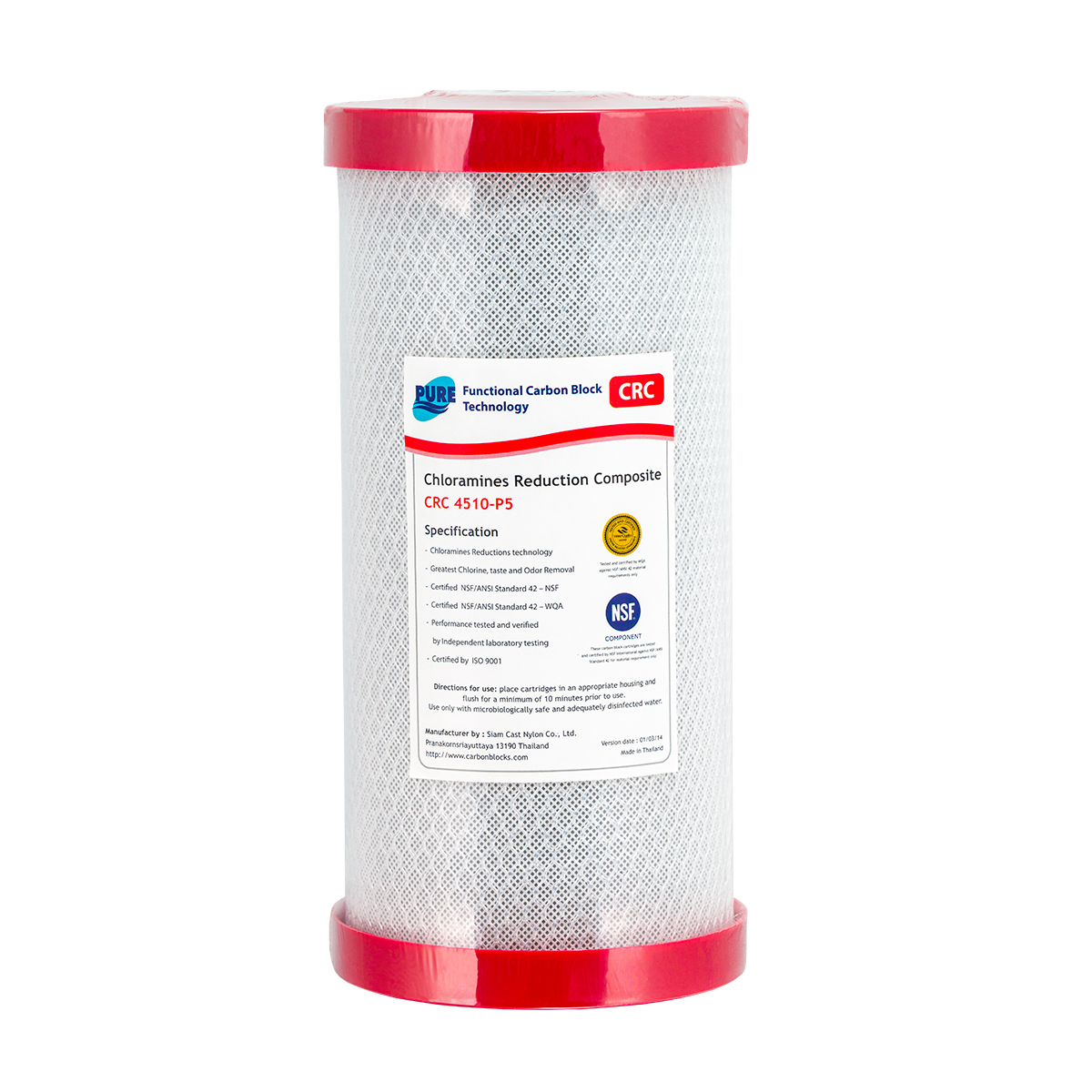
GT4-13CRC - 0.5 Micron Chloramine Reduction Coconut Carbon (Reduces BOTH Chlorine and Chloramines For Maximum Chemical Reduction on Mains Water)
-
- CRC (Chloramine Reduction Cartridge) uses Catalytic Carbon to filter out more chemicals/contaminants than standard chlorine reduction carbon alone (which doesn't remove chloramine).
Boasting a 0.5uM nominal rating, our 0.5 Micron Chloramine Reduction Carbon Block filter has a huge, highly reactive surface area of composite catalytic carbon designed to denature and neutralise chloramine, chlorine, and other reactive chemicals with minimal contact time. As water passes through the Chloramine filter, Chloramine and other chemicals react with the carbon block surface, producing denatured compounds that are then re-adsorbed by the carbon - essentially neutralising the Chloramine, Chlorine and chemical molecules.
Why remove Chloramine? Chloramine is fast becoming the most important topic when it comes to mains water. Free chlorine has long been the choice for cheap and long-lasting municipal water disinfection, and it can be easily removed from water with minimal contact time. However, the addition of monochloramine gas (NH2CL - an inorganic molecule composed of chlorine-bonded ammonia) is becoming more and more common as a secondary disinfection agent that provides longer-lasting disinfection than chlorine alone. Aesthetically, monochloramine gives off a strong chemical/ammonia smell in the water. Especially when mixed with fluoride (another common municipal additive in mains water), chloramine can even dissolve copper and lead, thus increasing the potential for corrosion and rust on metal surfaces. You may have seen this in action, as this is a common cause of blue/green staining in and around pipes and drains. Do you really want to be using corrosive-chemical-laden water to wash your pride and joy? Our answer is: probably not!
Optional Add On - Media Funnel:
 The specially-designed Media Funnel helps you fill the vessel without spilling expensive media, or getting the media stuck inside the drop tube! Use this funnel to save yourself from the hassle of having to try and push the drop tube back down into the dense media (because you've accidentally dropped media inside the tube, and had to pull the tube out to empty it)!